Sovereign Powers Under God and Founding Principles Shape Little Rock Township Data Center Ordinance
Opinion Piece | Michael Krempski

“A frequent recurrence to the fundamental principles of civil government is necessary to preserve the blessings of liberty. These blessings cannot endure unless the people recognize their corresponding individual obligations and responsibilities.” - Article I, Section 23, Illinois Constitution. [1]
In plain terms, liberty is not self-sustaining. It depends on the People to revisit the core ideas of self-government and accept responsibility for how self-government is carried out. Rights, it suggests, come with duties - to stay engaged, to hold institutions accountable, and to act when those institutions fall short.
The People of Little Rock Township are doing exactly that. At a special meeting on May 5, 2026, they approved a resolution and ordinance asserting direct local authority over commercial data center developments. This action is an example of the People stepping in to exercise their responsibility when they believe existing approval processes are no longer sufficient to protect their community.
The meeting was organized and conducted by the People through a lawful process. Joe McElroy, one of the People of Little Rock Township, was appointed moderator of the meeting. The proposed document was formally presented, its terms were clearly defined, and its constitutional alignment meticulously outlined. The floor was then opened for debate, and once a few questions were answered and clarifications made, a vote was taken on the matter.
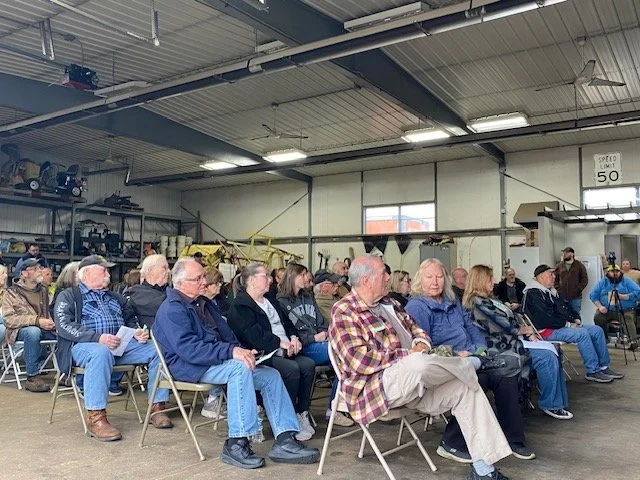
Little Rock Township Special Meeting, May 5, 2026, 611 W. Main Street in Plano, Illinois
This action did not occur in isolation, but within a broader local context.
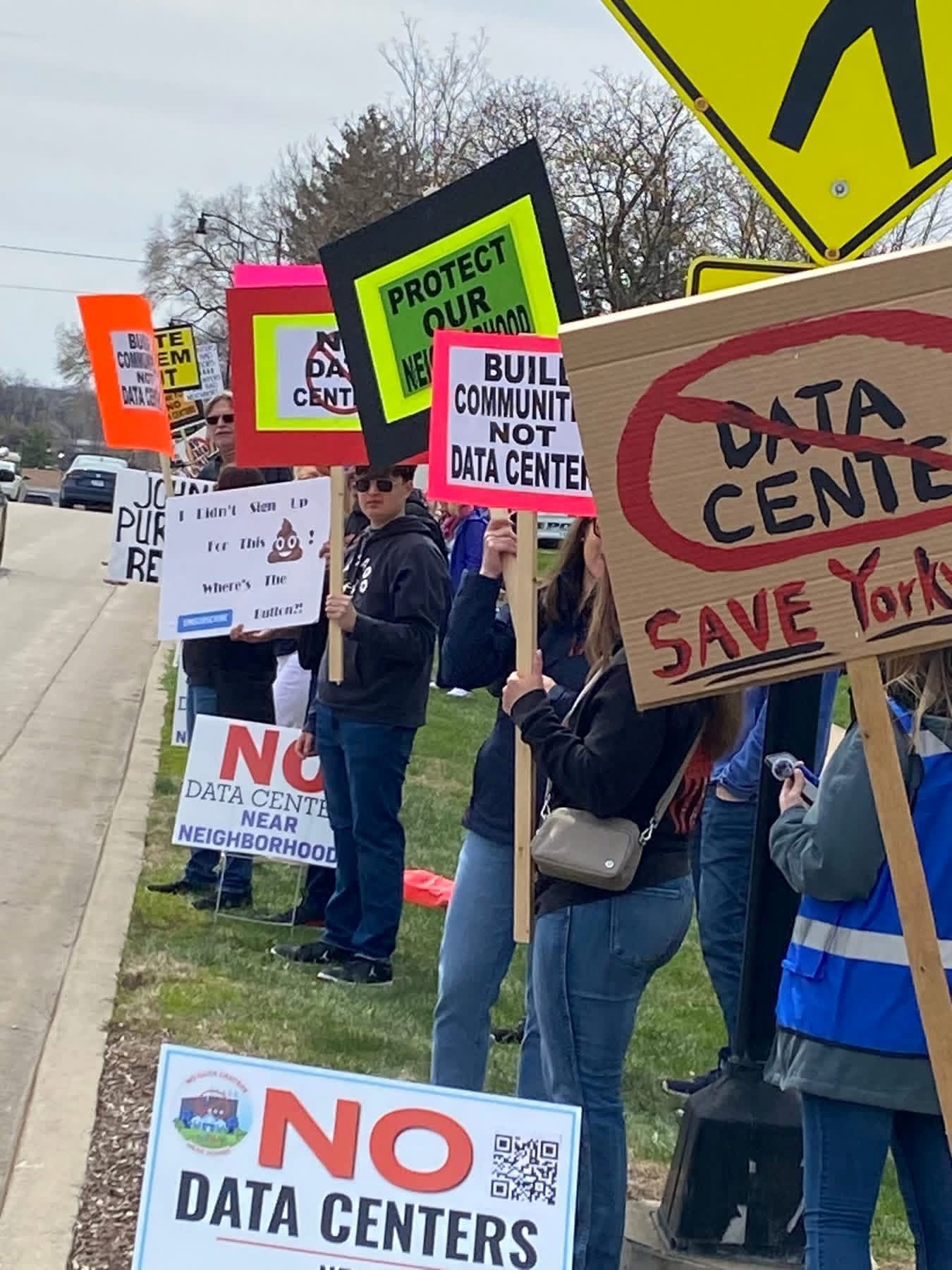
As data center developments continue to expand across the area, residents are increasingly raising concerns about environmental impacts, disruptions to community character, added strain on infrastructure, and potential effects on property values. Yorkville has recently become a focal point of this debate, highlighting a wider concern over how the rapidly increasing demand for digital infrastructure can be managed responsibly across Kendall County.
Resolution No. 2026-05-05 formally asserts the authority of the People of Little Rock Township to govern their local affairs, grounding that claim in both constitutional law and America’s founding principles. The resolution emphasizes their right to self-governance under the Illinois Constitution, the U.S. Constitution’s guarantee of a republican form of government, the powers reserved to the people through the Ninth and Tenth Amendments, and and long established maxims of law. It also draws on the Declaration of Independence, framing the action within a moral foundation rooted in the concept of rights derived from a higher, Divine authority. The Resolution affirms the People’s intent to exercise its sovereign powers through local initiative to regulate commerce and development in ways that protect environmental quality, preserve private property rights, maintain community character, and promote the public good.
The resolution also grounds its reasoning in a U.S. Supreme Court ruling emphasizing the limits of judicial authority and the sovereignty of the People. The resolution cites Justice Neil Gorsuch’s interpretation of constitutional governance, reinforcing the principle that ultimate political authority rests with the People through democratic processes. It states:
“WHEREAS, Justice Gorsuch of the United States Supreme Court reminds the people that the Court has no authority to depart from what the Constitution or laws of the United States ordain and says ‘Instead, the Constitution promises, the American people are sovereign and they alone may, through democratically responsive processes, amend our foundational charter or revise federal legislation.’ (Loper Bright Enterprises v. Raimondo, June 28, 2024);” [2]
The timing of the resolution is interesting, arriving as the United States approaches the 250th anniversary of the Declaration of Independence on July 4, 2026, a milestone that has prompted renewed national attention on the country’s founding ideals and Biblical principles. That broader conversation was recently echoed by Justice Clarence Thomas during a speech at the University of Texas at Austin, where he reflected on the enduring principles of the nation’s founding. “Progressivism seeks to replace the basic premises of the Declaration of Independence, and hence our form of government,” Thomas said. “It holds that our rights and our dignities come not from God, but from government.” He added, “If all men are created equal, that is final. If they are endowed with inalienable rights, that is final. If governments derive their just powers from the consent of the governed, that is final.” [3] Thomas framed his remarks as a defense of the Declaration’s core assertions, emphasizing that America’s founding principles remain the ultimate foundation of its system of government, a theme that closely parallels the reasoning cited in the township’s resolution.
The resolution also draws on foundational political thought, citing Alexis de Tocqueville’s observation in “Democracy in America” that townships arise naturally wherever people gather, forming the most organic and enduring level of civic association. It further references John Locke, whose work “Two Treatises of Government” argues that governments lose legitimacy when they violate the public trust by encroaching on the lives, liberties, or property of the people, principles that continue to inform modern debates over local governance and authority.
The township’s action also rests on its historical governance structure. The People of Little Rock Township also reaffirmed that the township was established in 1849 as a “county under township” government and that this structure remains in effect today. You can read more about that argument here.
Township government is one of the oldest forms of local government in North America, with its origins dating back to the early colonial period. Local self-governance developed from the necessity for communities to unite and address shared concerns. In Illinois, the option of township government was established in the state's 1848 Constitution, and shortly after, townships began operating. Kendall County is composed of nine townships: Little Rock, Bristol, Oswego, Fox, Kendall, Na-Au-Say, Big Grove, Lisbon, and Seward. The importance of township government was highlighted by Thomas Jefferson, who wrote:
“There are two subjects, indeed, which I shall claim a right to further as long as I breathe: the public education and the subdivision of counties into wards [townships]; I consider the continuance of Republican government as absolutely hanging on these two hooks.” [4]
Today, township meetings continue to reflect that principle, ensuring that decision-making remains close to the people and responsive to the needs of local communities.
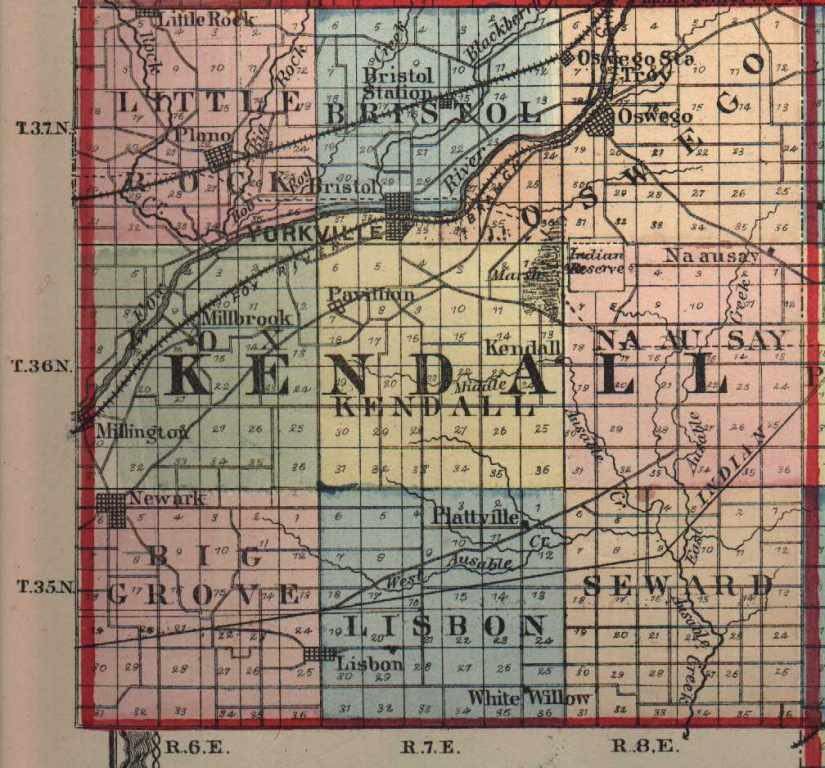
Photo: “Map of Kendall County, Illinois, 1875.” Kendall County IL Genealogy, Warner & Beers, 1875, View Image. Accessed May 5, 2026.
The resolution asserts that the People of Little Rock Township reserve the right to regulate land use and commercial development within their community. It states that any proposed data center project, after completing required statutory procedures and public hearings, must ultimately be approved or rejected by township voters in a special election. It also calls for full public transparency in advance of any vote, requiring that all application materials, studies, contracts, agreements, and related documents be made available for public review without redactions.
Ordinance No. 2026-05-05 establishes a framework requiring that any proposed commercial data center within Little Rock Township receive approval through a township wide special election after completing all applicable state and local permitting processes and public hearings. It mandates extensive public disclosure of all related application materials and prohibits redactions, with documents posted for at least 60 days prior to the vote. The measure outlines strict election procedures, including in-person voting, voter identification requirements, and a standard under which approval would require a majority of all registered electors, with nonvoters effectively counted as “no” votes. It also places financial responsibility for conducting the special election on the project applicant, allows only limited application to private non-commercial property use, and directs that the results of the election be binding on all government entities. The ordinance further frames its intent as protecting local property rights, environmental quality, and community welfare, while asserting strong township authority over land use decisions involving large-scale commercial infrastructure.
The Ordinance specifically states - “This local law is not intended to be utilized to trespass the rights of any of the People and shall be used only to regulate statutory entities or properties used for commercial data centers.” [5]
The People of Little Rock Township passed Resolution and Ordinance No. 2026-05-05 by a vote of 54 in favor and 0 opposed. The ordinance is effective immediately, and the Township will provide a formal written notification to the Illinois General Assembly, the Governor of Illinois, and all relevant regulatory bodies overseeing public and commercial land use within the Township’s boundaries. It also provides that copies of these notices would be made available to residents upon request.
Visit - Little Rock Township Website
Endnotes:
[1] Illinois General Assembly, Legislative Reference Bureau. Constitution of the State of Illinois. Illinois Constitution page Accessed May 5, 2026.
[2] Little Rock Township Resolution/Ordinance No. 2026-05-05 (Data Centers)
[3] “U.S. Supreme Court Justice Clarence Thomas Delivers Special Lecture at UT Austin.” YouTube, uploaded by The University of Texas at Austin, https://youtu.be/OI0igGDF9-Q. Accessed May 5, 2026.
[4] Township organization for Illinois; or, Local self-government for the people; Publication date: 1859; Publisher: Alton, Ill., Courier Steam Book and Job Printing House.
[5] Little Rock Township Resolution/Ordinance No. 2026-05-05 (Data Centers)
Interested in more stories about Little Rock Township? Check out our additional coverage on Yorkville Herald: