Opinion Piece | Michael Krempski
On July 4th, 2026, we will celebrate the 250th anniversary of the Declaration of Independence, a foundational document that enshrined the principles that formed the United States of America. This document was revolutionary in its ideas of self-governance, declaring that our rights come from God, not man or government. It laid out the colonists' grievances against King George III, detailing “a long train of abuses and usurpations” [1] that justified their separation.
The White House introduced a series of videos, titled "The Story of America," to celebrate this monumental milestone. In the introductory video, Larry P. Arnn, President of Hillsdale College, explains that “One of the things we must do to commemorate anything, commemorate just means to remember together, first we must know the thing, and we can’t remember it very well if we don’t know it very well.” [2]
To truly understand the significance of this anniversary, we must turn to the very words of the Declaration and the voices of the fifty-six courageous individuals who pledged their “Lives, Fortunes, and sacred Honor” [3] for the cause of independence.
On June 28, 1787, during the Constitutional Convention, when agreement seemed impossible and hopes of moving forward without disbanding were fading, Benjamin Franklin, signer of both the Declaration of Independence and the Constitution, rose to address the assembly. He urged the delegates to seek wisdom from a Higher Authority. He reminded them that they had first gathered in that very room under providential guidance and that the same guidance had sustained them through the long road to independence. Franklin formally moved that the Convention commence each day’s deliberations with prayer:
“In this situation of this Assembly, groping as it were in the dark to find political truth, and scarce able to distinguish it when presented to us, how has it happened, Sir, that we have not hitherto once thought of humbly applying to the Father of lights to illuminate our understandings? In the beginning of the Contest with G. Britain, when we were sensible of danger we had daily prayer in this room for the divine protection. Our prayers, Sir, were heard, and they were graciously answered. All of us who were engaged in the struggle must have observed frequent instances of a Superintending providence in our favor. To that kind providence we owe this happy opportunity of consulting in peace on the means of establishing our future national felicity. And have we now forgotten that powerful friend? Or do we imagine that we no longer need his assistance? I have lived, Sir, a long time, and the longer I live, the more convincing proofs I see of this truth: that God governs in the affairs of men. And if a sparrow cannot fall to the ground without his notice, is it probable that an empire can rise without his aid? We have been assured, Sir, in the sacred writings, that ‘except the Lord build the House they labour in vain that build it.’ I firmly believe this; and I also believe that without his concurring aid we shall succeed in this political building no better than the Builders of Babel: We shall be divided by our little partial local interests; our projects will be confounded, and we ourselves shall become a reproach and byword down to future ages. And what is worse, mankind may hereafter from this unfortunate instance, despair of establishing Governments by Human Wisdom and leave it to chance, war and conquest.
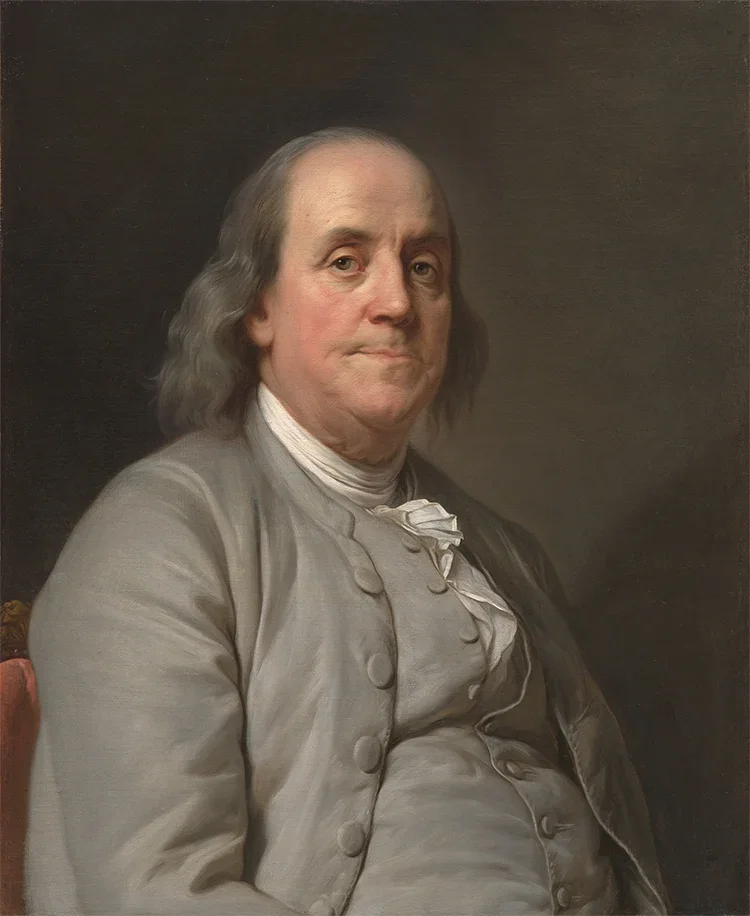
I therefore beg leave to move, that henceforth prayers imploring the assistance of Heaven, and its blessings on our deliberations, be held in this Assembly every morning before we proceed to business, and that one or more of the Clergy of the City be requested to officiate in that service.” [4]
Benjamin Franklin
Photo: National Portrait Gallery. “Benjamin Franklin (1706–1790).” Smithsonian National Portrait Gallery, Smithsonian Institution, https://npg.si.edu/learn/classroom-resource/benjamin-franklin-1706–1790. Accessed January 21, 2026.
When the Continental Congress first convened in September 1774 at Carpenters’ Hall in Philadelphia, delegates gathered to determine a response to British policies widely regarded as unjust and oppressive. One of the earliest proposals was to open the proceedings with prayer, a suggestion that immediately sparked debate. The delegates represented a wide range of Christian denominations, and some objected, arguing that their theological differences made shared worship impractical.
Samuel Adams rose to address these concerns, declaring that he “was no Bigot, and could hear a Prayer from a Gentleman of Piety and Virtue, who was at the same Time a Friend to his Country.” [5] He proposed inviting Jacob Duché, an Episcopal minister from Philadelphia, to lead the prayer. The motion was seconded and passed.
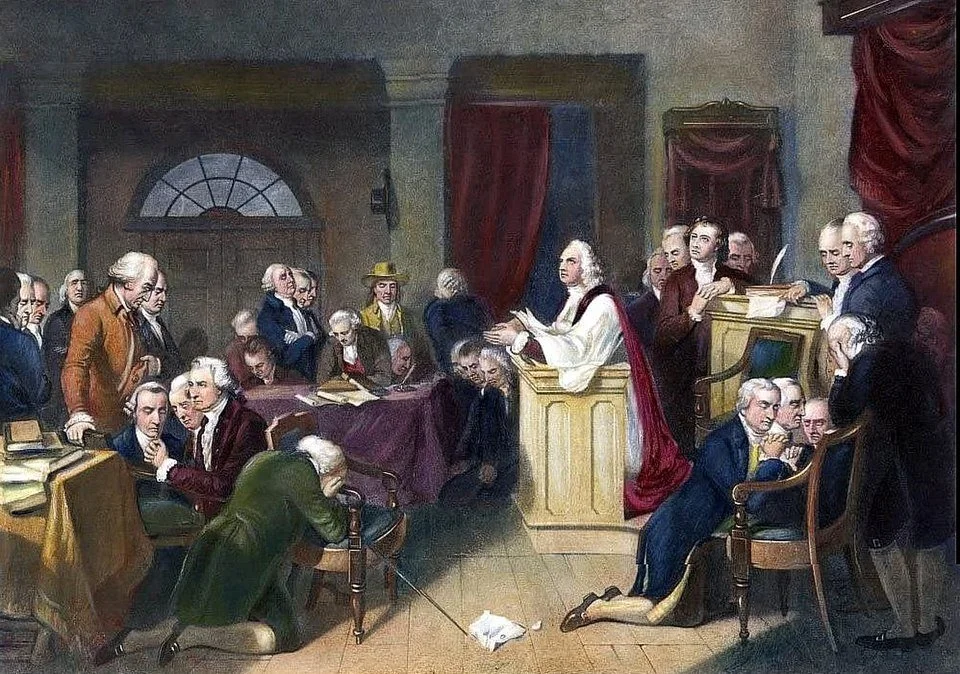
Photo: Matteson, Tompkins Harrison. First Continental Congress at Prayer (1848). Wikimedia Commons, uploaded by Gwillhickers, 24 July 2022, https://commons.wikimedia.org/wiki/File:First_continental_Congress_at_Prayer.jpg. Public domain. Accessed January 21, 2026.
The following morning, Duché read the appointed reading for the day, Psalm 35, and offered a passionate prayer asking for wisdom, unity, and divine guidance, marking the first official prayer of the Continental Congress. John Adams, a signer of the Declaration of Independence, later described the moment in a letter to his wife, Abigail, dated September 16, 1774. Reflecting on the tense circumstances, Adams wrote, “You must remember this was the next Morning after we heard the horrible Rumour, of the Cannonade of Boston.—I never saw a greater Effect upon an Audience. It seemed as if Heaven had ordained that Psalm to be read on that Morning.” [6]
“Plead my cause, O LORD, with them that strive with me: fight against them that fight against me.”
That moment stands as one of the most meaningful in early American history, helping to soften divisions among the delegates and foster a shared sense of purpose at a critical turning point for the colonies.
Many of the ideas presented in the Declaration were preached from the pulpits by pastors from previous generations, such as Reverend John Wise (1652-1725) from Ipswich, Massachusetts. [7] In 1772, the Sons of Liberty reprinted his sermons, which quickly became essential reading for those advocating for greater autonomy and, eventually, independence. These reprints provided a powerful intellectual and moral justification for colonial resistance. Wise’s theological arguments within these works resonated so powerfully with a new generation facing British imperial policies. Wise argued for principles such as "every man must be acknowledged equal to every man," the "consent of the governed," and "taxation without representation is tyranny." [8] His arguments, initially aimed at defending church governance, found new life and profound significance in the broader struggle for political freedom, solidifying his unexpected but vital role as a prophet of American liberty.
“The first human subject and original of civil power is the people…and when they are free, they may set up what species of government they please. The end of all good government is to cultivate humanity and promote the happiness of all, and the good of every man in all his rights, his life, liberty, estate, honor, etc., without injury or abuse done to any.”
Quote: Harris, Gordon. “The Rev. John Wise of Ipswich.” Historic Ipswich, 14 June 2024, historicipswich.net/2024/06/14/john-wise/. Accessed January 21, 2026.
Based on a University of Houston study analyzing 15,000 writings of the Founding Fathers, the Bible emerged as the most frequently cited source of influence. While they also referenced prominent Enlightenment thinkers, such as John Locke (2.9%), William Blackstone (7.9%), and Baron de Montesquieu (8.3%), the Bible accounted for the largest share of quotations at 34%. Among the biblical texts cited, the book of Deuteronomy was referenced most often. [9]
Deuteronomy records God’s dealings with a chosen nation, particularly in the establishment of political and legal institutions necessary for governing a society. It serves as a condensed restatement of God’s law, recounting the story of a people on the threshold of entering the Promised Land. The book emphasizes national unity, covenantal responsibility, and the principles required to live a blessed and orderly life.
The Founding Fathers regarded the Bible as essential to forming a moral citizenry capable of self-government. Scripture informed their understanding of virtuous leadership, clarified the rights and responsibilities of citizens, justified resistance to tyrannical authority, and grounded law in a higher moral order beyond mere human will. James Wilson, one of the most influential legal thinkers of the founding era, a signer of both the Declaration of Independence and the Constitution, and later a Justice of the U.S. Supreme Court, expressed this conviction with particular clarity. He maintained that human laws do not arise in isolation but derive their legitimacy from an objective moral standard established by God. In explaining this foundation of law and justice, Wilson stated:
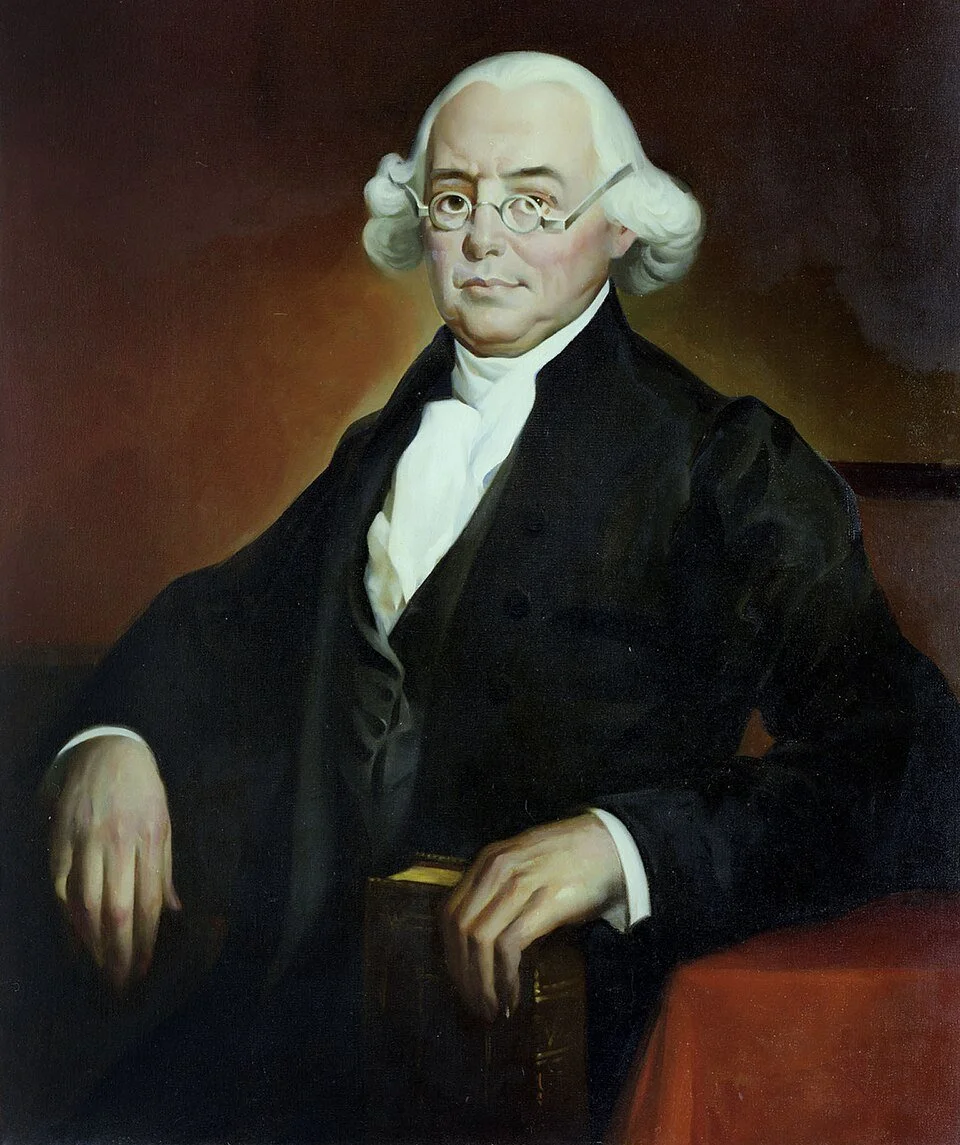
“All [laws], however, may be arranged in two different classes: (1) Divine. (2) Human . . . But it should always be remembered that this law, natural or revealed, made for men or for nations, flows from the same Divine source: it is the law of God . . . Human law must rest its authority ultimately upon the authority of that law which is Divine.” [10]
James Wilson
Photo: “Justice James Wilson, PA.” Wikimedia Commons, uploaded by Progressingamerica, 31 Oct. 2016, https://commons.wikimedia.org/wiki/File:JusticeJamesWilson.jpg. Accessed January 26, 2026.
Although the 4th of July is widely celebrated as America’s Independence Day, the decisive moment actually came two days earlier. On July 2, 1776. This vote stemmed from Richard Henry Lee’s resolution, introduced on June 7, 1776, which declared that the colonies should separate from Great Britain. Lee’s Resolution stated: “Resolved, That these United Colonies are, and of right ought to be, free and independent States… totally dissolved.” [11] To address the resolution, the Second Continental Congress formed committees, including one (the Committee of Five - Thomas Jefferson, John Adams, Benjamin Franklin, Roger Sherman, and Robert R. Livingston), charged with drafting a declaration to justify independence. The Founding Fathers shared a moral framework deeply influenced by a Biblical worldview that shaped colonial American society. Scripture informed their understanding of human nature, justice, and liberty, especially the belief that rights are granted by God rather than by man or government. This conviction is reflected in the Declaration’s truth that all men are “endowed by their Creator with certain unalienable Rights.” [12] Drawing on biblical principles of moral law, human equality before God, and accountability to a Higher Authority, the Committee of Five helped produce a document that grounded political independence in enduring spiritual and ethical truths.
Roger Sherman of Connecticut, who was on the “Committee of Five,” was the only Founding Father to have signed all four of the nation’s foundational documents: the Continental Association, the Declaration of Independence, the Articles of Confederation, and the U.S. Constitution. [13] Sherman firmly believed that Divine law defined right and wrong and should serve as the ultimate standard for human conduct and responsibility. Throughout his life and public service, Sherman exemplified leadership grounded in unwavering Christian faith and moral conviction. He once declared:
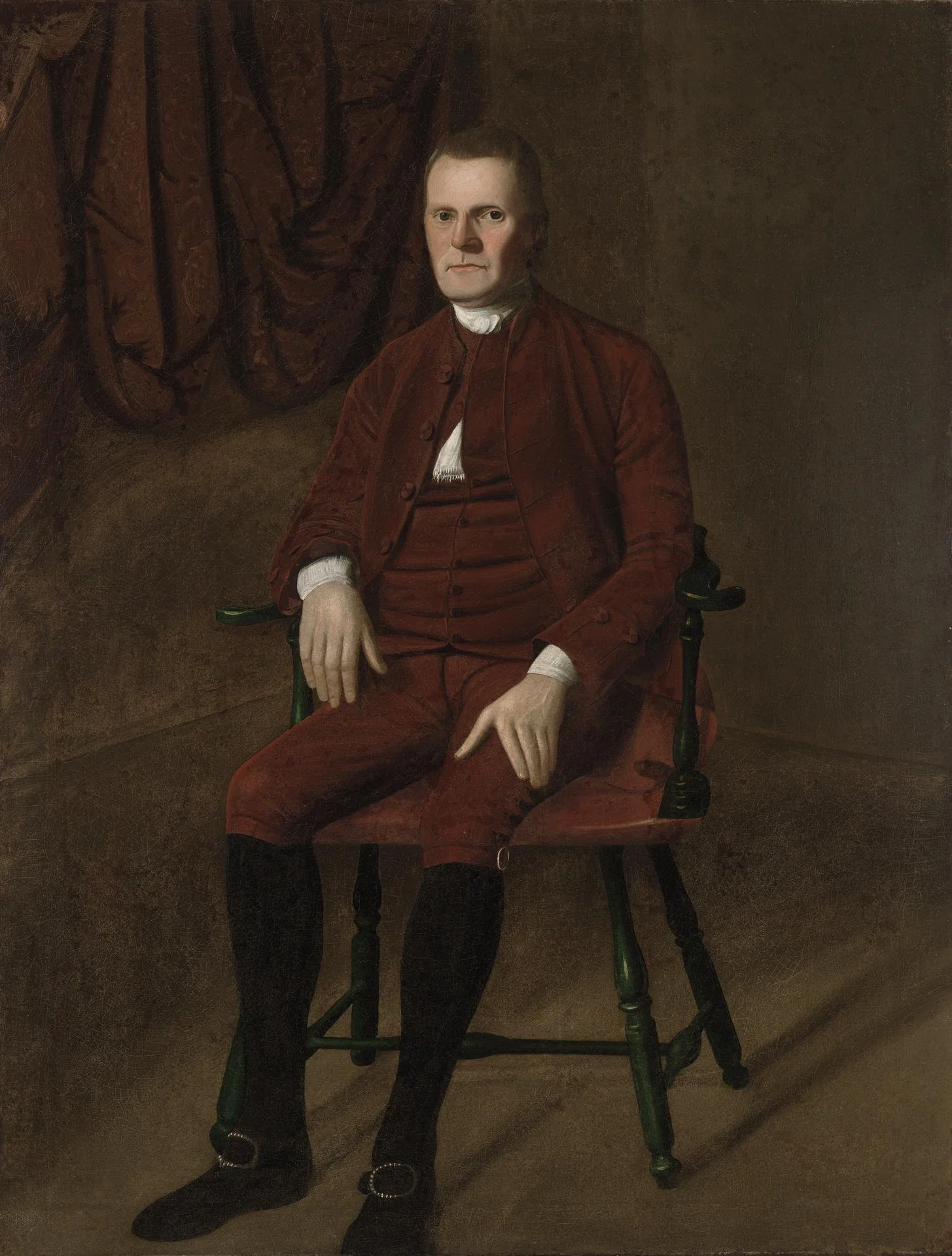
“[I]t is the duty of all to acknowledge that the Divine Law which requires us to love God with all our heart and our neighbor as ourselves, on pain of eternal damnation, is Holy, just, and good. . . . The revealed law of God is the rule of our duty.” [14]
Roger Sherman
Photo: Ralph Earl. Roger Sherman (1721–1793, M.A. [Hon.] 1768), ca. 1775. Yale University Art Gallery, New Haven, Connecticut. Oil on canvas, accession no. 1918.3. Yale University Art Gallery, https://artgallery.yale.edu/collections/objects/2448. Accessed 22 Jan. 2026.
On July 2, 1776, Congress approved the first part of Lee’s Resolution, with twelve colonies voting in favor; New York abstained until it received approval from its convention on July 9. [15] The historic vote was reported at the time, with the Pennsylvania Evening Post announcing, “This day the CONTINENTAL CONGRESS declared the UNITED COLONIES FREE and INDEPENDENT STATES.” [16] John Adams recalls the moment's significance in a letter to his wife, Abigail, on July 3rd, 1776:
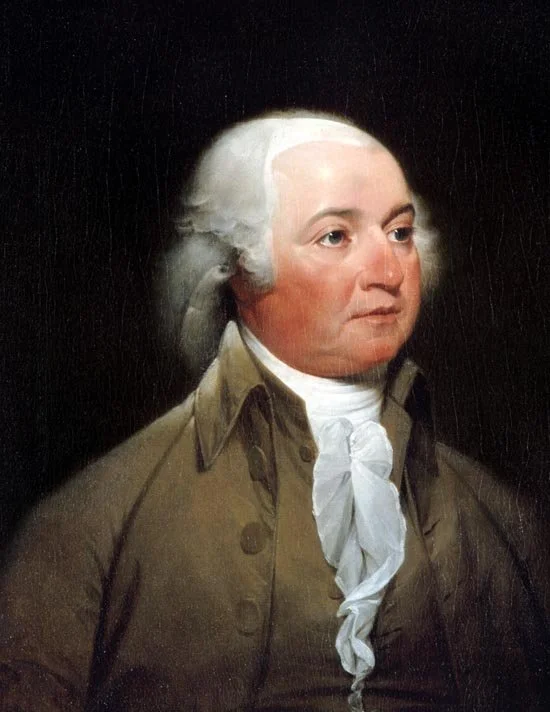
“The Second Day of July 1776, will be the most memorable Epocha, in the History of America.—I am apt to believe that it will be celebrated, by succeeding Generations, as the great anniversary Festival. It ought to be commemorated, as the Day of Deliverance by solemn Acts of Devotion to God Almighty. It ought to be solemnized with Pomp and Parade, with Shews, Games, Sports, Guns, Bells, Bonfires and Illuminations from one End of this Continent to the other from this Time forward forever more.” [17]
John Adams
Photo: Boston Tea Party Ships & Museum. “John Adams Accomplishments.” Boston Tea Party Ships & Museum, www.bostonteapartyship.com/john-adams-accomplishments. Accessed January 21, 2026.
The drafted document, the Declaration of Independence, was debated, revised, and finally approved by the Continental Congress on July 4, 1776. This is the date prominently displayed on the document itself, and it was on this day that the first printed copies, known as the "Dunlap Broadsides," were produced and distributed. [18] Most of the delegates did not affix their signatures to the final, handwritten copy of the Declaration until August 2, 1776. This is recorded in the Journals of Congress for that day -
"The declaration of independence being engrossed and compared at the table was signed [by the members]." [19]
The final document that the unanimous thirteen States of America approved refers to God in four biblical ways. His nature is expressed as Lawgiver, Creator, Supreme Judge, and Divine Providence. It acknowledges God as the source of moral law in “the Laws of Nature and of Nature’s God,” affirms human rights come from our “Creator,” appeals to the “Supreme Judge of the world” for the justice of its cause, and expresses reliance on the “protection of divine Providence.” [20]
The Declaration of Independence presents six universal truths, which are principles that are unchanging and not dependent on time, place, or culture.
There is a divine Creator
Unalienable rights come from God.
Government exists to protect unalienable rights.
There is a fixed moral law.
The government’s power only comes from the consent of the people.
The people have the right to change their government.
The day before the signing, on August 1, 1776, Samuel Adams, a signer of the Declaration of Independence, gave a speech before the Continental Congress stating, “There are instances of, I would say, an almost astonishing Providence in our favor; our success has staggered our enemies, and almost given faith to infidels; so we may truly say it is not our own arm which has saved us. The hand of Heaven appears to have led us on to be, perhaps, humble instruments and means in the great providential dispensation, which is completing. We have fled from the political Sodom; let us not look back, lest we perish and become a monument of infamy and derision to the world.” [21]
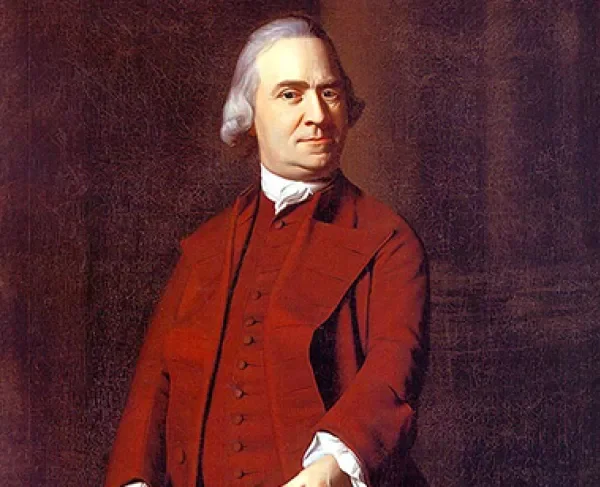
Photo: American Battlefield Trust. Samuel Adams. American Battlefield Trust, https://www.battlefields.org/learn/biographies/samuel-adams. Accessed January, 21, 2026.
Some signatures were added even later, as delegates arrived or returned to Congress. The last signer was Matthew Thornton, who signed in November 1776. [22]
The signers understood that what they were doing was treason, and they believed it would be their death sentence.
Dr. Benjamin Rush, a signer of the Declaration of Independence, recalled that day in a letter to John Adams in 1811. Rush described the moment's seriousness in the Pennsylvania State House (now Independence Hall) as they were called up to sign the document. The defining silence was only broken for a moment when Benjamin Harrison of Virginia, known for his sense of humor, said to Elbridge Gerry of Massachusetts just before he signed the Declaration of Independence:
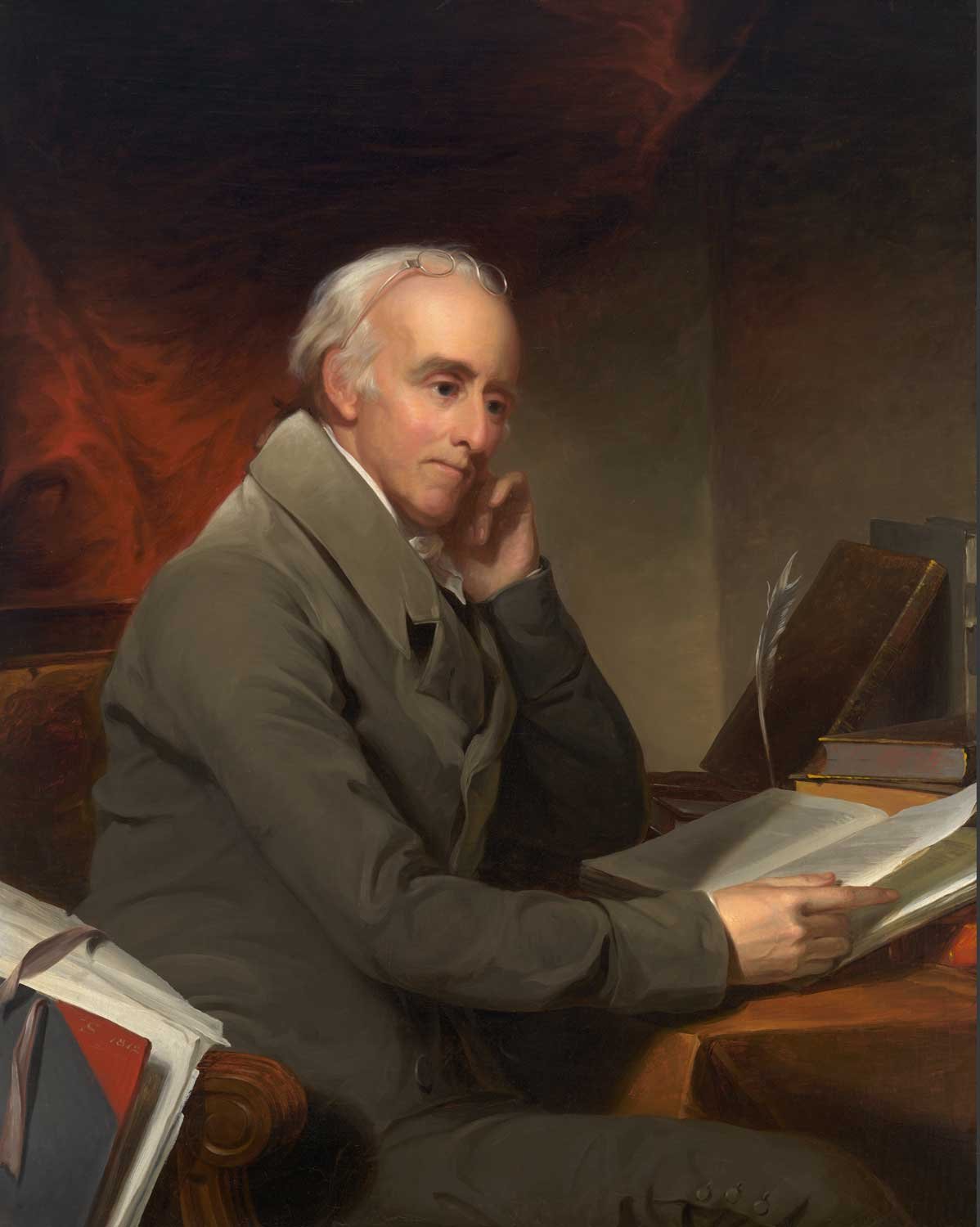
“I shall have a great advantage over you, Mr. Gerry, when we are all hung for what we are now doing. From the size and weight of my body I shall die in a few minutes, but from the lightness of your body you will dance in the air an hour or two before you are dead.” [23]
Dr. Benjamin Rush
Photo: National Portrait Gallery. “Dr. Benjamin Rush’s Portrait by Thomas Sully.” Smithsonian Institution, https://npg.si.edu/blog/dr-benjamin-rushs-portrait-thomas-sully. Accessed January 21, 2026.
So, what principles were the founders willing to die for?
John Adams said, “The general Principles, on which the Fathers Atchieved Independence, were the only Principles in which, that beautiful Assembly of young Gentlemen could Unite, and these Principles only could be intended by them in their Address, or by me in my Answer. And what were these general Principles? I answer, the general Principles of Christianity, in which all those Sects were United: And the general Principles of English and American Liberty, in which all those young Men United, and which had United all Parties in America, in Majorities Sufficient to assert and maintain her Independence.
Now I will avow, that I then believed, and now believe, that those general Principles of Christianity, are as eternal and immutable, as the Existence and Attributes of God: and that those Principles of Liberty, are as unalterable as human Nature and our terrestrial, mundane System.” [24]
Dr. Benjamin Rush believed that civic virtue and moral discipline were essential to sustaining liberty and preserving a self-governing society. He argued that a nation’s survival depended not only on laws and institutions but on the character of its people. This meant that America must educate its youth in the Christian principles upon which the nation was founded. As he stated, “[T]he only means of establishing and perpetuating our republican forms of government is the universal education of our youth in the principles of Christianity by means of the Bible.” [25]
At the 50th anniversary of the signing of the Declaration of Independence in 1826, Charles Carroll, then the last surviving signer, looked back on the nation’s founding with humility, gratitude, and reverence. He regarded America’s liberty as a gift from God and reflected on a lifetime devoted to the cause of freedom. On July 4, 1826, Thomas Jefferson and John Adams, both signers of the Declaration of Independence, died within hours of one another. This remarkable coincidence had been anticipated years earlier in a prophetic dream recounted by Benjamin Rush, who believed the two men would “sink into the grave nearly at the same time”, [26] as if marking the passing of the founding generation itself. Mindful of this moment, Carroll turned to the future, urging Americans to remain faithful to the principles that had secured their freedom and to vigilantly safeguard both civil and religious liberty for generations yet to come:
“Grateful to Almighty God for the blessings which, through Jesus Christ Our Lord, He has conferred on my beloved country in her emancipation and on myself in permitting me, under circumstances of mercy, to live to the age of 89 years, and to survive the fiftieth year of independence, adopted by Congress on the 4th of July 1776, which I originally subscribed on the 2d day of August of the same year and of which I am now the last surviving signer.
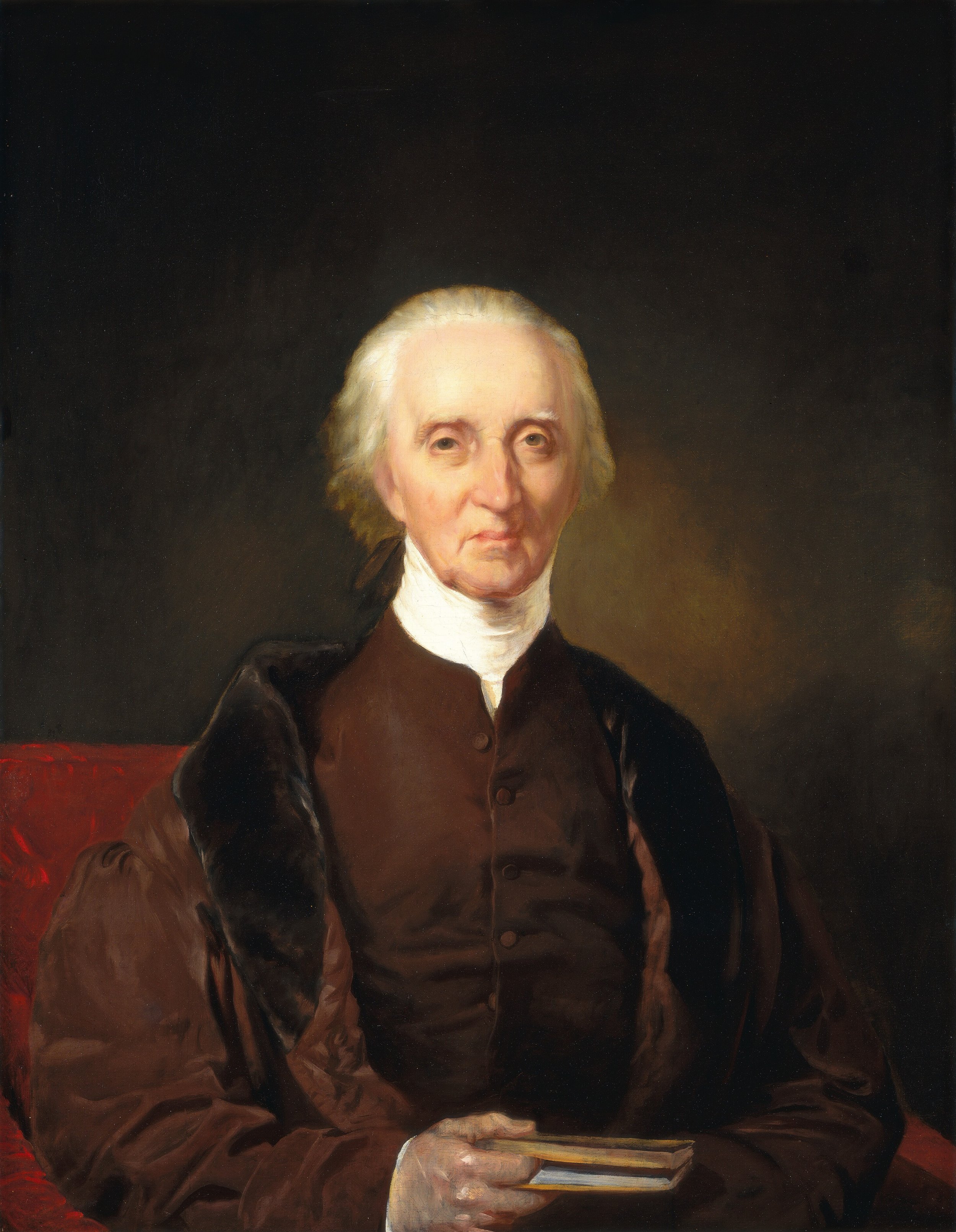

I do hereby recommend to the present and future generations the principles of that important document as the best earthly inheritance their ancestors could bequeath to them, and pray that the civil and religious liberties they have secured to my country may be perpetuated to remotest posterity and extended to the whole family of men.” [27]
Charles Carroll of Carrollton
Photo: Harding, Chester. Charles Carroll of Carrollton. c. 1828. National Gallery of Art, accession no. 1956.15.1, gift of Mr. and Mrs. Alexander Dallas Thayer, nga.gov/collection/art-object-page.43671.html. Accessed February 2, 2026.
As we commemorate the 250th anniversary of the Declaration of Independence, we honor more than a date on the calendar; we honor a vision of liberty grounded in courage, faith, and Divine guidance. The Founding Fathers risked everything, their lives, their fortunes, and their sacred honor, to proclaim truths that transcend time: that all men are created equal, that rights come from God, and that government exists to protect those rights. From the continual prayers of the Continental Congress to the sermons that stirred a generation, America’s birth was shaped as much by moral conviction as by political resolve. Their sacrifice reminds us that freedom is never free but is secured when citizens act with virtue, wisdom, and faith. As fireworks illuminate the skies this July, we do more than celebrate independence; we reaffirm our commitment to the principles that made it possible, trusting that the same Providence (the God of the Bible - Jesus Christ) that guided our founders continues to light the path of liberty for generations yet to come.
The 56 signers of the Declaration of Independence:
Delaware:
George Read | Caesar Rodney | Thomas McKean
Pennsylvania:
George Clymer | Benjamin Franklin | Robert Morris | John Morton | Benjamin Rush | George Ross | James Smith | James Wilson | George Taylor
Massachusetts:
John Adams | Samuel Adams | John Hancock | Robert Treat Paine | Elbridge Gerry
New Hampshire:
Josiah Bartlett | William Whipple | Matthew Thornton
Rhode Island:
Stephen Hopkins | William Ellery
New York:
Lewis Morris | Philip Livingston | Francis Lewis | William Floyd
Georgia:
Button Gwinnett | Lyman Hall | George Walton
Virginia:
Richard Henry Lee | Francis Lightfoot Lee | Carter Braxton | Benjamin Harrison | Thomas Jefferson | George Wythe | Thomas Nelson, Jr.
North Carolina:
William Hooper | John Penn | Joseph Hewes
South Carolina:
Edward Rutledge | Arthur Middleton | Thomas Lynch, Jr. |Thomas Heyward, Jr.
New Jersey:
Abraham Clark | John Hart |Francis Hopkinson | Richard Stockton | John Witherspoon
Connecticut:
Samuel Huntington | Roger Sherman | William Williams |Oliver Wolcott
Maryland:
Charles Carroll | Samuel Chase | Thomas Stone | William Paca
Endnotes:
[1] National Archives and Records Administration. “Declaration of Independence: A Transcription.” U.S. National Archives and Records Administration, https://www.archives.gov/founding-docs/declaration-transcript. Accessed January 21, 2026.
[2] The White House. The Story of America, an Introduction. 18 Apr. 2025, www.whitehouse.gov/videos/the-story-of-america-an-introduction/. Accessed January 21, 2026.
[3] National Archives and Records Administration. “Declaration of Independence: A Transcription.” U.S. National Archives and Records Administration, https://www.archives.gov/founding-docs/declaration-transcript. Accessed January 21, 2026.
[4] Madison Debates: June 28, 1787. Avalon Project, Yale Law School, Lillian Goldman Law Library, 2008. Accessed January 21, 2026. https://avalon.law.yale.edu/18th_century/debates_628.asp
[5] Adams, John. “John Adams to Abigail Adams, 16 September 1774.” Founders Online, National Archives, https://founders.archives.gov/documents/Adams/04-01-02-0101. Originally published in The Adams Papers, Adams Family Correspondence, vol. 1, December 1761 – May 1776, edited by Lyman H. Butterfield, Harvard University Press, 1963, pp. 156–157.
[6] Adams, John. “John Adams to Abigail Adams, 16 September 1774.” Founders Online, National Archives, https://founders.archives.gov/documents/Adams/04-01-02-0101. Originally published in The Adams Papers, Adams Family Correspondence, vol. 1, December 1761 – May 1776, edited by Lyman H. Butterfield, Harvard University Press, 1963, pp. 156–157.
[7] “John Wise.” Encyclopædia Britannica, Encyclopædia Britannica, Inc., www.britannica.com/biography/John-Wise-American-colonial-minister. Accessed January 21, 2026.
[8] WallBuilders, Lesson 2: Colonial Period (mid-1600s-1765), WallBuilders, https://wallbuilders.com/wp-content/uploads/Lesson-2-Colonial-Period-mid-1600s-1765-updated.pdf. Accessed 22 Jan. 2026.
[9] Lutz, Donald S. The Origins of American Constitutionalism. Louisiana State University Press, 1988. (141)
[10] Pledge Protection Act of 2004: House Report 108-691. 108th Cong., 2nd Sess., U.S. House of Representatives Committee on the Judiciary, 21 Sept. 2004, https://www.congress.gov/108/crpt/hrpt691/CRPT-108hrpt691.pdf. Accessed January 26, 2026.
[11] National Archives and Records Administration. “Lee Resolution (1776).” National Archives, U.S. National Archives and Records Administration, https://www.archives.gov/milestone-documents/lee-resolution. Accessed January 21, 2026.
[12] National Archives and Records Administration. “Declaration of Independence: A Transcription.” U.S. National Archives and Records Administration, https://www.archives.gov/founding-docs/declaration-transcript. Accessed January 21, 2026.
[13] “A Remarkable Signature – Who Knew?” Connecticut History | a CT Humanities Project, 10 June 2022, connecticuthistory.org/a-remarkable-signature-who-knew/. Accessed January 21, 2026.
[14] WallBuilders. The Founding Fathers on Jesus, Christianity and the Bible. WallBuilders, 29 May 2023,
https://wallbuilders.com/resource/the-founding-fathers-on-jesus-christianity-and-the-bible/#_ednref108. Accessed January 21, 2026.
[15] HISTORY.com Editors. “Continental Congress Votes for Independence from Britain | July 2, 1776.” History, A&E Television Networks, 13 Nov. 2009, updated 27 May 2025, https://www.history.com/this-day-in-history/july-2/congress-votes-for-independence. Accessed January, 21, 2026.
[16] Tsapina, Olga, Ph.D. “Proclaiming Independence”. The Huntington, The Huntington Library, Art Museum, and Botanical Gardens, 2 July 2024, https://www.huntington.org/verso/proclaiming-independence. Accessed January 21, 2026.
[17] Adams, John. John Adams to Abigail Adams, 3 July 1776. Founders Online, National Archives and Records Administration, https://founders.archives.gov/documents/Adams/04-02-02-0016. Originally published in The Adams Papers, Adams Family Correspondence, vol. 2, June 1776–March 1778, edited by L. H. Butterfield, Harvard University Press, 1963, pp. 29–33. Accessed January 21, 2026.
[18] Dunlap Broadside (First Printing of the Declaration of Independence). National Archives and Records Administration, https://www.archives.gov/dc/highlights/dunlap-broadside. Accessed January 21, 2026.
[19] Journals of the Continental Congress, 1774–1789. Vol. 5, edited from the original records in the Library of Congress by Worthington Chauncey Ford et al., Library of Congress, 1904. PDF file. Library of Congress, https://tile.loc.gov/storage-services/service/ll/llscd/lljc005/lljc005.pdf. Accessed January 21, 2026.
[20] National Archives and Records Administration. “Declaration of Independence: A Transcription.” U.S. National Archives and Records Administration, https://www.archives.gov/founding-docs/declaration-transcript. Accessed January 21, 2026.
[21] Adams, Samuel. “Speech About the Declaration of Independence.” Samuel Adams Heritage Society, www.samuel-adams-heritage.com/documents/speech-about-declaration-of-independence.html. Accessed January 21, 2026.
[22] National Constitution Center. “Matthew Thornton.” Constitution Center, National Constitution Center, https://constitutioncenter.org/signers/matthew-thornton. Accessed January 21, 2026.
[23] Rush, Benjamin. “To John Adams from Benjamin Rush, 20 July 1811.” Founders Online, National Archives and Records Administration, https://founders.archives.gov/documents/Adams/99-02-02-5659. Originally published in The Adams Papers, vol. 9, Diary and Autobiography of John Adams, edited by Charles Francis Adams, Massachusetts Historical Society, 1971. Accessed January 21, 2026.
[24] Adams, John. John Adams to Thomas Jefferson, 28 June 1813. Founders Online, National Archives and Records Administration, https://founders.archives.gov/documents/Jefferson/03-06-02-0208. The Papers of Thomas Jefferson, Retirement Series, edited by J. Jefferson Looney, vol. 6: 11 March–27 November 1813, Princeton: Princeton University Press, 2009, pp. 236–239. Accessed January 21, 2026.
[25] WallBuilders. The Founding Fathers on Jesus, Christianity and the Bible. WallBuilders, 29 May 2023, https://wallbuilders.com/resource/the-founding-fathers-on-jesus-christianity-and-the-bible/#_ednref108. Accessed February 9, 2026.
[26] Rush, Benjamin. “To John Adams from Benjamin Rush, 17 October 1809.” Founders Online, National Archives and Records Administration, https://founders.archives.gov/documents/Adams/99-02-02-5450. Accessed February 2, 2026.
[27] Leonard, Lewis Alexander. Life of Charles Carroll of Carrollton. New York: Moffat, Yard and Company, 1918. p. 256-257. Internet Archive, https://archive.org/details/lifeofcharlescar01leon/page/256/mode/2up. Accessed February 2, 2026.